Today I was at a meeting in one of my networks and one of the members asked me how things were going with the writing and pusblishing. I explained to her that I´d come fairly well out of Read an eBook Week and was looking forward to getting one of my novels done so that I could publish it. Then she asked me something that made me think:
"When you write," she said, "do you lock yourself in a room with no connection to the world outside for a week or so to better concentrate on your writings?"
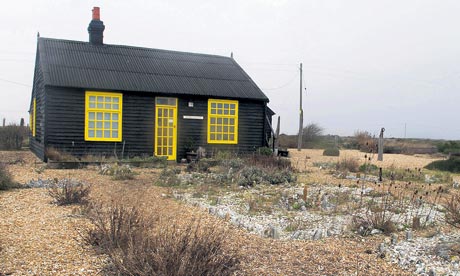
Instantly I got the picture in my head of some author with writer´s blog leaving the world behind and travelling to some worn out cottage in the wilderness so far away from civilization that there are no phones, radio or internet.
I answered that I usually write when I am alone, but that I need to have people around me during the day in order to function in my life.
But when I drove home that question seemed to have hooked itself on to my main thought stream. I began asking myself a simple question with a complexe and unfinished answer:
"From where do I draw inspiration and how do I get it written into words?"
It may seem simple enough, but the fact is that I really had to think about it. Actually I´m still thinking about it. One thing I know for sure is that I wouldn´t be able to write a single coherent sentence or come up with even the roughest sketch of a character, if I close myself off to the real world.
On the other hand I also need time alone to think and to write. Time where I´m sure to not get interrupted and all my thoughts and plots wander off to another dimension.
It seems to me that all of this is a fine balance. Too much active "World Time" prevents me from thinking and writing but not enough "World Time" will eventually kill my "muse," so to speak.
I haven´t to a full extend found the right abalcne and I have the notion that this balance is never really found. I´m even beginning to think that if I was at some point in time getting very close to such a balance, it would not be for long, because the right balance would then have changed - because I change, my family changes, the world changes...
Even if you are not a writer and even if you are not a creative person, you may have similar balances to balance in your life.
"The youth now love luxury; they have bad manners, contempt for
authority; they show disrespect for elders and love chatter in place of
exercise. Children are now tyrants, not the servants of their households. They
no longer rise when elders enter the room. They contradict their parents,
chatter before company, gobble up dainties at the table, cross their legs, and
tyrannize their teachers."
Perhaps
you´ve seen the above statement before. Supposedly it was said by Socrates in
his defense speech when he was acused of corrupting society. If this is true or
it´s a hoax made by either Platon or Xenophon is unknown, but the fact remains
that it´s been written by the students of Socrates and thereby we can safely
say that someone thought these thoughts in ancient Greece.
Recently
I read a quote by a simple farmer that is even more to the point:
“Things
today are not what they used to be - and they never have!”
“What
does this have to do with Indie vs. Traditional publishing?” you may ask.
Well,
it really is quite simple:
Every
generation feels threatened by the culture and views of the next and this is
apparently also the case for generations of publishers and authors.
Try
watching the underneath clip from youtube. It´s in Norwegian, but someone has been kind
enough to provide a translation in English. When you´ve watched it, please read
on, because I have some important points to make:
Medieavel Help Desk
A
friend and fellow author wrote on his blog:
“One of my university lecturers told a friend to tell me that
if I self-publish it might ruin my chances of being traditionally published or
entering competitions.” - you can read the entire post here.
Why would any publisher or host of a writing competition rule
out selfpublishers? Do they not want good quality? Or could it be that they
would rather have uniformity in views on how to properly publish?
Indie Authoring threaten to shift the power balance
I think it has to do with defending your livelihood. If Indie
Authoring becomes main stream, how would publishers make money and survive the
publishing business?
Thus, it would seem to be better to try giving selfpublishers
a bad name and start rumours about poor quality and bad editing. And yes, there
a examples of both in the Indie World, but quite frankly: so is the case with
traditional publishing.
Are there more poor quality in Indie books than in others?
Well, to be honest, I think there is, but for one thing, it´s
going in the right direction as the readers simply won´t read bad quality and
thereby bad writers and writers publishing bad edited books won´t sell their
books. In time, bad quality will diminish to a level competing well with
traditional published books. And we are almost there…
And this brings me to the point I want to make:
Really, the publishing war is not a question of quality, but
a question of “who makes money and for what services?”
But it doesn´t sound good if traditional publishing companies
use this argument, does it?
“We think, Indie Publishing should stop, because it shifts
the balance of power and we are beginning to make less money than before!”
Hmmm…. Not a solid case, is it?
It sounds much more reasonable to come up with all sorts of
excuses and statements about quality and reading experience - just like you saw
the munk in the video clip complaining about this new world of books, where
things aren´t as they used to be.
Examples are vast
I could continue for hundreds of pages with examples that
Indie Authoring is a good idea that will not go away, but it would bore you, I
think.
Instead, I´ll tell you something quite interesting:
About a decade ago, a single mum received no less than 25 rejections
on her manuscript for a children´s book, before a small publisher decided to
take her in as a new author.
That author was J.K.Rowlings and the book was “Harry Potter
and the sorcerers stone.”
Imagine, if she decided to believe the publishers word that
the book wasn´t any good?
It´s been way too long since I´ve written about the issue of how to write, so here´s another post on the subject:
Would you read a story about someone you don´t find interesting?
One of the main reasons any person would continue reading a book is that they connect with the characters in some way.
It doesn´t have to be in such a way that the reader finds the character to be similar to themselves. In fact that is rarely the case. But the characters must be described in such a way that:
1. They seem to be alive 2. The reader can recognize some of their own characteristics in the character 3. The reader is intrigued by some of the characteristics that are completely different from the reader´s own characteristics.
That´s why you need to begin with the beginning. Tell your readers about your characters and their back grounds. It´s much easier to understand why a person does what he does if you have that basic information about them. And sometimes, when neither you, the author, or the reader understand a characters actions, at least his actions seem to fit his personality.
How to make you character alive When I attended college we performed the musical "West Side Story." I played the part of Riff, the leader of "The Jets" and in the end of an act (don´t remember which one, sorry) I and another character were both killed and lay dead on the stage. The best way would have been for the lights to fade away and the curtains to fall, but we performed in the college hall way, so there were no curtains. Instead, we had to sneak out with the lights off so that the audience wouldn´t notice. We had prepared ourselves for this and we knew exactly the right time to move, so that it wouldn´t be too early and ruin the magic moment of silence, but still not so late, that the audience had gotten used to the dark and could see us leaving.
At the opening night we lay there and counted the seconds and at exactly the right moment we moved. But as soon as we got to our feet, someone turned on the lights and there we were: two dead people standing alive in plain sight for everyone to see. It really ruined the moment...
The lesson to be learned here is quite simple: if your character does something that is completely off course to his personality or the circumstances at hand - in this case dead men walking - it ruins the magic and the reader will be sucked through the portal between the makebelieve world and the real world. And if this happens, you can´t expect to be able to bring the reader back.
So, in all respects: keep the magic and live the makebelieve life in your writings. Failure to do so will put off your readers.
Making a connection between reader and character Among authors there is a saying: show it, don´t tell it. What it means is that instead of explaining a characters personality using a description, it´s much better to show personality with action.
Really, it should be apparent if we consider how we interact with real people. When you meet someone new, you can´t get into their heads and read their minds and you can´t know anything about their history. So what is it that we do instead? Well, we look at their behaviour and listen to what they say.
An example from my short story, "The Mysterious Disappereance of McGrath:"
"McGrath had a bad temper and got into fights with everyone everywhere" would be an explanation, but if the writer chooses to put in some of McGrath´s interactions with other people showing his temper, the story comes more to life, somewhat like this:
"His landlord stood there by the door for a
few seconds building up his nerve, which granted McGrath just enough time to
get himself seated in his well used armchair before he heard the reluctant
tapping on solid wood. He almost thrust the chair through the wall in anger.
“What!”
“Hmmf…” the frightened man said loosening
his tie and gasped, “I…well…it got stuck.” McGrath didn’t re-enter his home,
but instead almost flew past his landlord while complaining loudly about all
the vultures the world was populated with."
The main reason is that the storyteller, that is: the author, is an alien presence in the book and should be held to an absolute minimum to present the story as real life like as possible.
But! There is one difference between real life and the makebelieve world: time! Living your life has it´s paste and in most cases you don´t get to really know anyone in just a few hours. It takes time. And time you don´t have when reading a book. Here the time passes completely different than in real life and even the paste is different from passage to passage.
So, having said that "show, don´t tell" is very important, sometimes authors forget the first part of the saying, so instead the story will be "don´t tell it." If you don´t use the advantage of writing, meaning that you can actually get into people´s heads and read their minds and that you can get to knwo their history in just a few sentences, you may very well loose your reader.
By the end of the first few chapters you would be lucky to have half of your readers still reading the story.
So always remember to tell the story of your characters, if you want your readers to understand where they are coming from. Your readers do not always have to understand why the character does what it does, but your characters´ actions must always be coherent with their personality and if your reader does not have the basic back ground of your character, they will be absolutely lost trying to determine if the characters´ actions ARE coherent with their personalities.
Why is difference between the personalities of reader and character important?
Well, their are at least two reasons:
1. Reading about yourself really isn´t all that exciting 2. We all tend to be protective of our self understanding
The first one is obvious: if your reader wanted to read about himself, he wouldn´t bother reading something you wrote. He would look up his diary or check out his timeline on Facebook... The key word here is "Booooring!"
We want to be able to connect with the people in the book, but they also must be interesting to us. Interesting people are not like ourselves. And obviously we are walking the fine line of too much/ too little here...
The second reason is more suttle and often, when we read, we don´t think about it. But if you were to read about a person, who seems to be very much like yourself and that person suddenly was in a situation, where he decided to do something immoral or criminal, your subconciousness would register a head on attack on your own person. We don´t like that, do we? It´s okay to be challenged, but not too much. In smaller bits, please...
What do you think? I´ve now presented you with these basics and they might be helpful to you as you endeavour into writing your next masterpiece! However, these passages may also have the opposite effect, so:
Where do you think the right balance between difference and likeness with the characters is?
Do you always remember to focus on the balance between show and tell?